How to Bridge Crypto Between Blockchains Safely
Moving coins from one blockchain to another sounds simple, but it is where a lot of people lose money. Bridges have leaked more than $2.8 billion since 2022, and most of the rest gets stolen through fake bridge websites. This guide walks you through what a bridge actually does, the two main ways they work, and the exact steps to move funds without becoming a statistic.
What a bridge really does
Blockchains do not talk to each other on their own. Your ETH on Ethereum cannot just appear on Arbitrum or Base, because those are separate ledgers with their own rules. A bridge is the piece of software that lets value cross from one chain to another, so you can use the same money on a different network.
People bridge for normal reasons. You want cheaper fees on a layer 2. You found a token that only trades on Solana. You moved to an exchange that pays out on one chain but you need the funds on another. None of that is exotic. The trick is that the moment funds leave one chain and arrive on another, there is a gap, and that gap is what attackers go after.
Two things matter before you start: which chain you are coming from, and which chain you want to end up on. Get those backwards and you can send tokens to a network where your wallet or your app cannot use them. That mistake is not a hack, but it can still strand your money.
Lock-and-mint, in plain terms
The older style of bridge works by locking and minting. You send your real tokens into a smart contract on the first chain, where they get locked up. The bridge then creates, or mints, a matching wrapped version on the second chain. So if you lock 1 ETH on Ethereum, you might get 1 wrapped ETH on the other side that stands in for it. When you want to come back, you burn the wrapped token and the original gets unlocked.
This works, but it has a weak spot. All those locked tokens pile up in one contract, and that pile is a target. If an attacker finds a flaw in how the bridge checks deposits or signs off on transfers, they can mint wrapped tokens out of thin air or drain the locked vault directly. Most of the largest bridge thefts in crypto history hit exactly this design. The wrapped token also fragments your holdings, because wrapped ETH from one bridge is not the same asset as wrapped ETH from another.
Intent-based bridging, the newer approach
The newer style is intent-based, and it flips the order of events. Instead of locking your money and waiting for the other side to catch up, you tell the system what you want: "I have this much USDC on Base, give me USDC on Arbitrum." A network of liquidity providers, often called solvers or relayers, compete to fill that request. The winning solver fronts you the tokens on the destination chain right away from their own stock, then gets repaid afterward through the settlement layer.
The practical upside is speed and a cleaner risk picture. Protocols built this way, like Across, often settle in seconds rather than minutes, and there is no giant locked vault waiting to be drained. If the settlement step fails, it is the solver who eats the loss, not you, as long as your destination transfer already landed. A shared standard called ERC-7683, developed by Uniswap Labs and Across, is pushing intents toward becoming the default for everyday transfers. It is not magic, though. You are still trusting the protocol's contracts and its solver network, so the URL and contract checks below still apply.
Official chain bridges versus third-party ones
Not all bridges carry the same risk. The safest option for any major layer 2 is usually its own official bridge, sometimes called the canonical bridge, built by the chain's own team. Arbitrum Bridge, Base Bridge, Optimism Bridge and zkSync Bridge are the obvious examples. These tie directly into the chain's proof system, so there are fewer extra parties you have to trust.
There is one honest tradeoff. Canonical layer 2 bridges that send funds back down to Ethereum mainnet can take up to about seven days, because of the built-in fraud-proof window that protects the chain. That is slow on purpose. Third-party bridges and intent protocols front you liquidity to skip that wait, which is convenient, but you are now trusting their validators or solvers instead of the chain's own proofs. Faster does not mean safer. It means you swapped one set of trust assumptions for another. For large amounts, slower and official is often the smarter call.
The safe bridging checklist
Here is the part that actually keeps your money. Most bridge losses for regular users are not clever protocol hacks, they are fake websites. Attackers buy search ads, poison search results, and register look-alike domains using tricks like swapping one letter for a similar one. You search "Arbitrum bridge," click the top result, connect your wallet, approve a transaction, and your funds are gone.
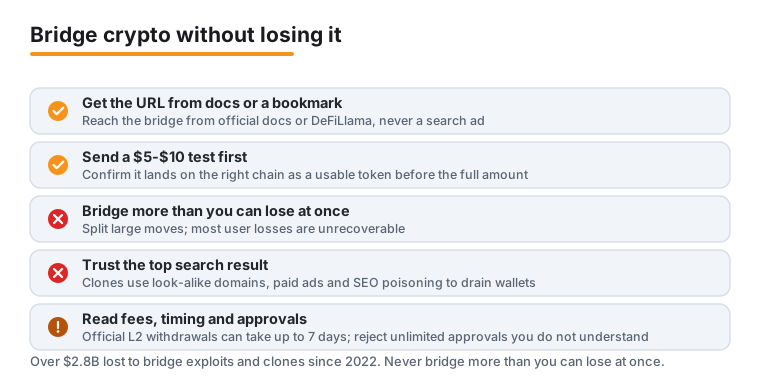
Run through these steps every single time, even on a bridge you have used before:
- Get the URL from the project's own documentation or a trusted source like DeFiLlama, not from a search ad. Better yet, save the real link as a bookmark and only use that.
- Check the address bar character by character. Look-alike domains are designed to pass a quick glance.
- Connect your wallet and read the actual transaction it asks you to sign. If a token approval is set to unlimited and you do not understand why, stop.
- Pick your source chain and destination chain carefully, and confirm the wallet or app on the other side actually supports the token you are sending.
- Review the fee and the estimated time before you confirm. Walk away if either looks off.
One more rule that costs you nothing: never bridge more than you are willing to lose in a single transaction. Split large moves into smaller ones if you have to.
Always send a tiny test first
This is the single habit that separates people who have bridged for years without incident from people who learn the hard way. Before you move any real amount, send a small test. Five or ten dollars is plenty. Push it through the bridge, then go to the destination chain and confirm it actually arrived in the right wallet, as the right token, in a usable form.
A test transfer checks three things at once. It confirms the site is real and not draining you. It confirms you picked the correct chains. And it confirms the destination app or wallet recognizes what you sent. Only after that small amount lands cleanly should you send the rest. Yes, you pay gas twice. That is a tiny price next to losing the whole transfer because you fat-fingered a network or trusted a clone.
Understanding fees and timing
Bridge costs are not one number. You usually pay gas on the source chain to start the transfer, a protocol fee to the bridge itself, and sometimes gas again on the destination chain. Protocol fees commonly land somewhere between 0.04% and 0.30% of the amount, depending on the bridge and the route. The quote you see should bundle most of this together, but read it rather than assuming.
Timing swings widely. Intent-based bridges can finish in seconds for common stablecoin routes. General transfers often take a few minutes. And as noted, official withdrawals from a layer 2 down to Ethereum can take days. If a transfer is taking longer than the quoted time, do not panic and do not resubmit it, because firing a second transaction can cost you more gas or duplicate the move. Check the bridge's status page or a block explorer first.
When things go wrong
Sometimes a transfer hangs. The funds left one chain and have not shown up on the other. In most cases this is just the bridge waiting on confirmations, and it resolves on its own within the quoted window. Use a block explorer for the destination chain to look up your wallet address and see if the incoming transaction is pending.
If you suspect you connected to a fake site, act fast. Move any remaining funds out of that wallet to a fresh one, and revoke token approvals you granted, using a reputable approval-checker tool. A malicious approval can let an attacker drain you later, not just at the moment you signed. This is also the reason a hardware wallet helps: it forces you to physically confirm what you are signing, which catches a lot of these traps before they execute.
Frequently asked questions
What is the safest way to bridge crypto?
Use the chain's official bridge when you can, reach it from a bookmarked or documented URL rather than a search result, and send a small test transfer before moving the full amount. Official bridges add fewer extra parties to trust, and the test confirms both the site and your chain choices are correct.
Why have bridges lost so much money to hackers?
Older lock-and-mint bridges hold large pools of locked tokens in one contract, which makes a single rich target. A flaw in how the bridge verifies deposits or signs transfers can let attackers mint fake tokens or drain the vault. Bridges account for more than $2.8 billion in losses since 2022, around 40% of all value stolen in the space.
What is the difference between lock-and-mint and intent-based bridges?
Lock-and-mint locks your real tokens on one chain and mints a wrapped version on the other. Intent-based bridges skip the lock: you state what you want, and a solver fronts you the tokens on the destination chain immediately, getting repaid afterward. Intent bridges are usually faster and avoid a large locked vault, so the solver carries the settlement risk instead of you.
Are third-party bridges more dangerous than official ones?
Not automatically, but they carry different risks. Official canonical bridges lean on the chain's own proof system, while third-party bridges rely on their own validators or solvers and front you liquidity for speed. Faster usually means you traded one set of trust assumptions for another. For large amounts, the slower official route is often the safer choice.
How small should my test transfer be?
Five or ten dollars is enough. The point is to confirm the bridge works, you picked the right chains, and the destination wallet recognizes the token, before you risk a real amount. Once that small transfer lands cleanly, send the rest. Paying gas twice is a small cost next to losing everything.
How long does bridging take?
It depends on the type. Intent-based bridges can settle in seconds for common stablecoin routes, and general transfers often take a few minutes. Official withdrawals from a layer 2 back to Ethereum can take up to about seven days because of the built-in fraud-proof window. If a transfer runs past its quote, check a block explorer rather than resubmitting it.
Last updated: 2026-06-24.