How to Dollar-Cost Average Into Bitcoin
Dollar-cost averaging into Bitcoin means buying a fixed dollar amount on a set schedule, no matter what the price is doing. You set it up once, the exchange runs it for you, and you stop trying to guess the bottom. This guide shows you how to set recurring buys on a reputable exchange, how to pick an amount you can actually stick with, and the honest tradeoffs nobody mentions until your tax forms show up.
What dollar-cost averaging actually is
The idea is simple. Instead of dropping one big chunk of money into Bitcoin on a single day, you split it into many small buys spread over time. Say you decide to put in 50 dollars every week. Some weeks Bitcoin is up, some weeks it is down, and your fixed 50 dollars buys less coin when the price is high and more when it is low. Over months, you end up with an average entry price that smooths out the wild swings.
People shorten it to DCA, and you will see exchanges advertise it as auto-invest or recurring buys. They all mean the same thing. The point is not to outsmart the market. The point is to keep buying steadily so a single bad-timing decision does not wreck you.
Bitcoin is volatile enough that timing a lump sum can feel like a coin flip. DCA takes that pressure off. You commit to a habit, not a forecast.
Pick a reputable exchange first
Before anything else, choose where you buy. Your money and your coins sit on this platform, so reputation matters more than a flashy interface. In the US, the names people trust for recurring buys are Coinbase, Kraken, and Bitcoin-only services like Strike and River. All of them let you schedule automatic purchases.
What to actually check before you commit:
- Is it regulated and registered where you live, with a real track record? Skip anything obscure that promises low fees and little else.
- Can you withdraw your Bitcoin to your own wallet? You want the option, even if you do not use it on day one.
- What does a recurring buy cost? This is the part most people skip, and it adds up. More on that below.
- Does it support the payment method you want, like a linked bank account rather than a debit card?
Funding from your bank balance is almost always cheaper than a card. On most platforms a card purchase carries an extra fee on top of everything else, so link a bank account or keep a cash balance on the exchange and buy from that.
How to set up a recurring buy on Coinbase
Coinbase is where a lot of beginners start because the setup is quick. Open the app or the website, sign in, and look for the Buy option. Choose Bitcoin, enter the amount you want to spend each time, then set the frequency. You can pick daily, weekly, twice a month, or monthly. Select your payment method, review the order, and confirm. That is it. The buy now repeats on its own until you cancel it.
Here is the catch. The standard Coinbase buy you just set up is the convenient one, and convenience is not free. A simple recurring buy can carry a spread baked into the price plus a fee that often lands around 1.49 percent or higher depending on your payment method. On a 100 dollar buy that is a dollar and a half gone before you own a single satoshi, every single time.
The cheaper route on the same platform is Coinbase Advanced. It uses a maker-taker fee model that starts around 0.60 percent for takers at the entry level, and recurring orders are supported there too. The interface looks more like a trading screen, which scares some people off, but the fee difference is real. Testing reported on a 100 dollar buy showed the simple flow costing well over 3 percent once the spread was included, versus a little over 1 percent on Advanced. Across hundreds of buys, that gap is a lot of Bitcoin.
Setting it up on Kraken or a Bitcoin-only app
Kraken works much the same way. Use the Buy or recurring feature, choose Bitcoin, set the amount and the schedule of daily, weekly, or monthly, and confirm. Kraken charges roughly 1 percent on instant and recurring trades through the simple interface, and that fee is waived for Kraken+ subscribers on volume up to a monthly cap. If you want the lowest cost, Kraken Pro charges about 0.25 percent maker and 0.40 percent taker at the base tier, similar to the Coinbase Advanced idea.
If you only care about Bitcoin, the dedicated apps are worth a look. Strike lets you set a recurring purchase with no minimum, so you could buy a few cents an hour or a larger amount weekly, and it advertises a small spread with fees waived after the first scheduled buy for many frequencies. Swan Bitcoin runs auto-DCA with a flat fee structure and supports withdrawals straight to your own cold wallet. River is another Bitcoin-only option people use specifically because the recurring-buy costs stay low. These services do one thing, and the fee math on long-term stacking tends to favor them over a general exchange's simple buy button.
Why fees matter so much over hundreds of buys
This is the part that quietly decides how much Bitcoin you end up with. DCA means a lot of transactions. If you buy weekly for five years, that is 260 separate buys. A fee that looks tiny on one purchase compounds into a real number across all of them.
Run the math. Buy 100 dollars of Bitcoin every week for ten years. At a 1.5 percent fee, you hand over about 780 dollars in fees on roughly 52,000 dollars invested. At 0.4 percent, that drops to about 208 dollars. Same habit, same schedule, but the cheaper route keeps almost 600 dollars working for you instead of going to the exchange. Stretch the amounts or the years and the gap widens.
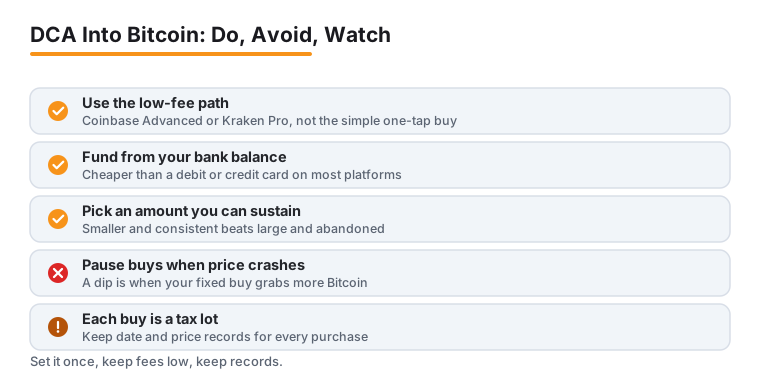
So the single most useful thing you can do is move off the convenient simple-buy button and onto the lower-fee path, whether that is Coinbase Advanced, Kraken Pro, or a Bitcoin-only app with a thin spread. The minor extra effort of learning a slightly busier screen pays you back for years.
One more fee to watch is the spread, the small markup between the price you pay and the true market price. Some platforms hide a chunk of their cost there, so a buy that advertises a low fee can still cost more than it looks. Check both the stated fee and the spread before you commit a schedule.
The psychology benefit is the real reason it works
Most people do not lose money on Bitcoin because they picked the wrong week. They lose because they panic. They buy when the price is screaming upward and everyone is excited, then sell in fear when it crashes. That is the emotional whipsaw that wrecks returns.
DCA removes the decision from your hands. The buy happens automatically on Tuesday whether Bitcoin just dropped 20 percent or jumped 20 percent. You are not staring at a chart deciding if today is the day. That sounds small, but it is the whole game. A steady investor who never times the market usually beats an emotional one who tries to.
It also makes the volatility easier to live with. When the price falls, your next scheduled buy simply picks up more Bitcoin at the lower price, so a dip starts to feel less like a disaster and more like a discount. That mental shift keeps people in the game long enough to actually benefit.
The honest limits you should know
DCA is a good habit, but the marketing oversells it. Three things are worth being straight about.
First, DCA does not beat lump-sum investing on average. If you already have the money and the market generally rises over time, putting it all in at once tends to win. A well-known Vanguard analysis across the US, UK, and Australian markets found lump-sum investing came out ahead of DCA roughly two-thirds of the time over ten-year periods, because markets are up more often than they are down. DCA is not the higher-return play. It is the lower-regret play, and it is the realistic one if you are investing from each paycheck rather than from a pile of cash.
Second, the fees on recurring buys can be high, especially through the simple one-tap flow. We covered the math above. Do not let the convenience quietly tax you for a decade.
Third, taxes get fiddly. Every single buy is its own cost-basis lot, with its own date and price. When you eventually sell, you have to know which lots you sold to calculate your gain. That matters because of how long you held each lot and at what price you bought it. Keep records of every purchase, or use a crypto tax tool that imports them. Starting in 2026, US brokers are required to report cost basis for assets acquired on or after January 1, but you are still responsible for keeping your own clean records, particularly if you move coins between platforms or to your own wallet.
Pick an amount and frequency you can sustain
The best DCA plan is the boring one you never have to think about. Pick an amount that does not stress your budget if Bitcoin drops hard, because it will at some point. A common mistake is starting too aggressive, feeling the pinch, and quitting. Smaller and consistent beats larger and abandoned.
On frequency, the difference between daily, weekly, and monthly is smaller than people imagine. More frequent buys smooth the average a little more, but the effect is minor and more buys can mean more fee events on some platforms. Weekly or twice a month is a sensible middle ground for most people. Match it to when your pay lands so the money is there.
Set it, then mostly leave it alone. Check in every few months to confirm the buys are running and your fees still make sense, and revisit the amount when your income changes. Resist the urge to pause it when the price is falling. The falling price is exactly when DCA is doing its job.
Frequently asked questions
Is dollar-cost averaging better than buying all at once?
Not for raw returns. On average, investing a lump sum tends to beat DCA because markets rise more often than they fall, and a Vanguard study put lump-sum ahead about two-thirds of the time. DCA wins on a different axis. It removes timing stress and matches how most people actually get money, a bit at a time from each paycheck. If you have a large amount sitting in cash, lump-sum is statistically the stronger play, though many people still spread it out to sleep better.
How much should I put into Bitcoin each time?
Only what you can lose without changing your life, and an amount you can keep up through a crash. There is no magic number. Many people start with something small like 25 or 50 dollars a week and raise it later. The goal is a plan you will not abandon when the price drops 30 percent, because that is when sticking with it matters most.
Daily, weekly, or monthly, which frequency is best?
The performance difference between them is small, so do not overthink it. More frequent buys smooth your average price slightly more but can trigger more fee events on some platforms. Weekly or twice a month suits most people and lines up with paychecks. Pick one you will not babysit and let it run.
Why are recurring-buy fees a big deal?
Because DCA means many transactions, and a small percentage repeated hundreds of times adds up. Buying weekly for ten years is 260 buys. At 1.5 percent you might pay around 780 dollars in fees on 52,000 dollars invested, versus roughly 208 dollars at 0.4 percent. Using a lower-fee path like Coinbase Advanced, Kraken Pro, or a Bitcoin-only app keeps more money buying Bitcoin instead of paying the exchange.
Do I owe tax on each recurring buy?
Buying Bitcoin is not a taxable event on its own. The tax shows up when you sell or trade it. The complication is that every recurring buy is a separate cost-basis lot with its own date and price, so when you sell you need to know which lots you sold to figure out the gain. Keep records of every purchase, or use a crypto tax tool that pulls them from your exchange. US brokers must report cost basis for assets acquired from January 1, 2026, but your own records still matter, especially if you move coins around.
Should I pause my buys when the price is crashing?
No, and this is the whole point of DCA. A falling price means your next fixed buy picks up more Bitcoin for the same money. Pausing during a crash is just market timing through the back door, and it usually means buying back in higher after you feel safe again. If the plan was sound when you set it up, let it keep running through the dips.
Last updated: 2026-06-24.