How to Send Crypto Safely: A Step-by-Step Guide
Sending crypto is one of those tasks that feels simple until something goes wrong. You copy an address, paste it, press send, and the money moves. The catch is that the network does exactly what you tell it, even when you make a mistake. There is no support line that can claw the funds back and no bank that can reverse the charge.
This guide walks through how an ordinary person can send coins or tokens from a wallet or an exchange to another address without losing them. It covers the core procedure step by step, the fees and waiting times to expect, the most common ways people get tricked, and a short list of things you should never do. This is educational information, not financial advice.
Why crypto sends are final
The single most important thing to understand before you send anything is that a confirmed crypto transaction cannot be reversed or refunded. There is no chargeback, no fraud department, and no undo button. Once the network confirms a transfer, the coins belong to whoever controls the receiving address.
This is different from a card payment or a bank transfer, where a human can sometimes intervene. With crypto, the rules are enforced by software and by the people running the network, not by a company that answers to you. That is part of the appeal for some people, but it also means the responsibility for getting the details right sits entirely with you.
Because mistakes are permanent, the safe approach is slow and deliberate. The few extra minutes you spend checking an address or sending a test amount are cheap insurance against losing the whole transfer. If you are new to holding your own keys, our guide on setting up a self-custody wallet explains the basics of being your own bank.
Get the recipient's exact address and network
Every transfer starts with two pieces of information from the person or service you are paying: the receiving address and the network that address lives on. The address is a long string of letters and numbers. The network is the blockchain it expects, for example Bitcoin, Ethereum, or a cheaper chain used for stablecoins.
A receiving address is safe to share. It only lets people send funds to you, so the recipient handing it over is not taking a risk by doing so. The secret that must never be shared is the recovery phrase (also called a seed phrase), which controls the wallet itself. If anyone ever asks for your recovery phrase in order to send you money, that is a scam.
Ask the recipient to confirm both the address and the network in writing, and prefer a QR code if they can provide one. Many coins exist on more than one network, and the address format can look similar across them, so do not assume. If you are unsure which chain to use, our guide on choosing the right network compares the common options.
Match the network on both sides
This step causes more permanent losses than almost anything else. Sending on the wrong network can lose your funds for good, even when the address looks valid. The same is true if you send to an exchange that requires a memo or tag and you leave it out.
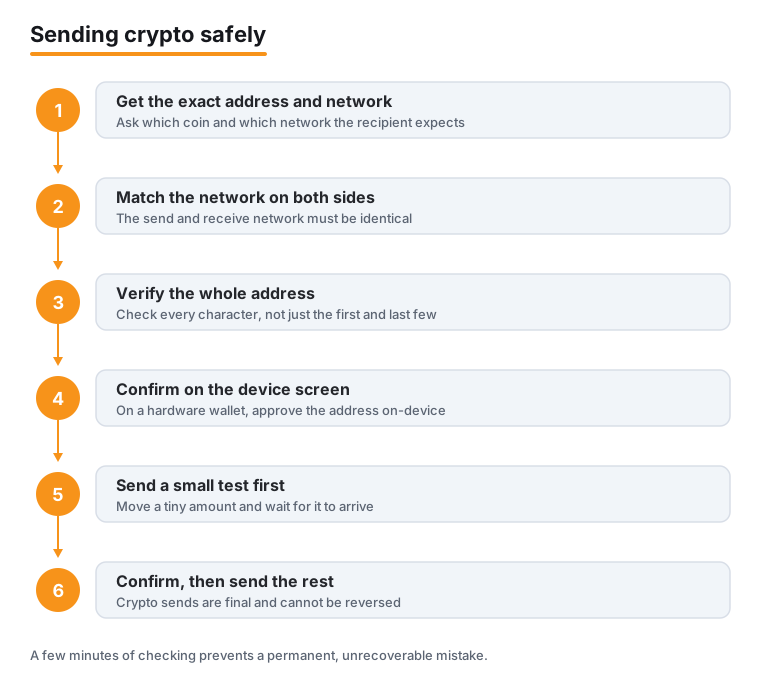
Before you send, line up three things and make sure they agree:
- The network the recipient told you to use.
- The network selected in your sending wallet or exchange (the dropdown is easy to miss).
- Any extra field the destination requires, such as a memo or destination tag for certain exchange deposits.
If your wallet shows the recipient's address as invalid, stop. An invalid address usually means you are on the wrong network or have an incomplete string, not that you should force it through. Picking the cheapest chain is tempting, but the receiving side has to support that exact chain. For background on how the same token can live on different networks, see moving crypto between exchanges.
Paste and verify the whole address
Now you enter the address. Do not type it by hand; one wrong character and the funds are gone. Instead, follow these steps carefully:
- Copy the address from the recipient, or scan their QR code if available.
- Paste it into the recipient field in your wallet or exchange.
- Verify the entire address, character by character, against the original. Do not check only the first and last few characters.
- Where your wallet offers an address book, save trusted addresses and reuse them instead of pasting fresh each time.
Checking only the ends of an address is a habit attackers count on. Two security tricks specifically target lazy verification. Clipboard-hijacking malware silently swaps the address you copied for the attacker's address the moment you paste. Address poisoning seeds your transaction history with a lookalike address whose first and last characters match one you have used before, hoping you copy the wrong one from your own history. Both are defeated by the same habit: read the whole string, not just the ends. For more on how these scams work, the Ledger Academy security pages are a useful reference.
Confirm the address on a hardware wallet
If you keep your crypto on a hardware wallet, you have an extra layer of protection, and you should use it. When you send, the device shows the receiving address on its own small screen. Verify that the address on the hardware screen matches the one you intend to pay, then approve on the device itself.
This matters because the hardware screen is hard for malware to tamper with. Even if clipboard-hijacking software has swapped the address on your computer, the device displays the address the transaction will actually use. If the address on the device does not match what you expect, reject the transaction and investigate.
Treat the on-device confirmation as the final word, not a formality to click through. The whole point of a hardware wallet is that this one screen is trustworthy even when your computer is not. If you are still choosing where to keep coins, our overview of Bitcoin wallets explains the trade-offs between hot and cold storage.
Send a small test amount first
For any transfer that matters, or any address you are using for the first time, send a small test amount before the full sum. A test costs you only the network fee, and it confirms the whole path works before real money is at stake. Here is the routine:
- Send a tiny amount (enough to be worth the fee, but small).
- Ask the recipient to confirm it arrived, or check it yourself.
- Only after it lands, send the remaining balance to the same address.
You will pay a network fee on every on-chain send, including the test. On Bitcoin the fee is a flat amount per transaction, often a dollar or two and more when the network is busy. On Ethereum the fee depends on gas and varies with demand. Some cheaper stablecoin networks can cost well under one US dollar. The test fee is small compared to the amount you protect. Fee structures differ between platforms; for example, Coinbase publishes its own schedule.
Confirm it arrived, then send the rest
After you send, the transaction needs to be confirmed by the network before it is final. Confirmation times vary by chain. An Ethereum or stablecoin transfer often lands in seconds to a few minutes. A Bitcoin transfer typically takes 10 to 60 minutes, and congestion can extend that. Waiting is normal; a pending transfer is not a lost one.
You can track progress yourself on a blockchain explorer, which shows whether a transaction is pending or confirmed and how many confirmations it has. The Etherscan Information Center explains how to read these records. Our walkthrough on reading a blockchain explorer covers the same idea in plain English.
Once the test amount is confirmed as received, send the rest to the same verified address. Do not re-paste from your clipboard for the second send; reuse the saved address or the same field, since re-pasting is exactly when clipboard malware can strike again. Confirm the whole address one last time, then approve.
What not to do
A few habits cause most avoidable losses. Keep this short list in mind every time you send:
- Do not type an address by hand or trust only the first and last characters.
- Do not skip the network check, the memo or tag field, or the test amount.
- Do not share your recovery phrase with anyone, for any reason.
- Do not rush because someone is pressuring you; urgency is a common tactic in scams.
- Do not pay a fund recovery service that promises to retrieve sent crypto. These are usually a second scam targeting people who already lost money.
Scam losses are large and well documented. The FBI IC3 2025 Annual Report tracks reported fraud, including crypto-related cases. If you have already sent funds to the wrong place, our guide on what to do if you sent crypto to the wrong address sets honest expectations about your options.
Frequently asked questions
Can I cancel or reverse a crypto transfer after I send it?
No. Once a transaction is confirmed on the network, it cannot be reversed or refunded. There is no chargeback and no support line that can claw the funds back. This is why verifying the address and sending a test amount first matter so much; the checks happen before you send, because there is no fixing it afterward.
Is it safe to give someone my receiving address?
Yes. A receiving address is safe to share because it only lets people send funds to you. The secret you must never share is your recovery phrase, which controls the whole wallet. If anyone asks for your recovery phrase in order to send you money, it is a scam.
Why do I have to check the whole address and not just the ends?
Because two common attacks target people who check only the first and last characters. Clipboard-hijacking malware swaps your copied address for the attacker's when you paste. Address poisoning plants a lookalike address in your history whose ends match one you use. Reading the entire string defeats both.
How long should I wait before I send the rest after a test?
Wait until the test amount is actually confirmed as received, not just sent. An Ethereum or stablecoin transfer often confirms in seconds to a few minutes, while a Bitcoin transfer typically takes 10 to 60 minutes and can be slower when the network is busy. Once you or the recipient see it has arrived, send the remaining balance to the same verified address.
What happens if I send on the wrong network or forget a memo?
You can lose the funds permanently. Sending a token on a network the recipient does not support, or depositing to an exchange that requires a memo or destination tag without including it, are both common ways money disappears. Always match the network on both sides and fill in any required memo or tag before you send.
A service says it can recover crypto I already lost. Should I use it?
Be very cautious. Fund recovery services that promise to retrieve sent or stolen crypto are usually a second scam aimed at people who have already lost money. Confirmed transactions cannot be reversed, so no legitimate service can simply pull your funds back. Do not pay upfront fees to such offers.
Last updated: 2026-06.
Related guides
- How to Set Up 2FA and Stop SIM-Swap Attacks
- How to Set Up a Hardware Wallet (Ledger or Trezor), Step by Step
- How to Stake Crypto: A Step-by-Step Beginner's Guide
- How to Swap One Crypto for Another Safely
- How to Accept Crypto Payments as a Business
- How to Set Up a Self-Custody Wallet
- Crypto Scams and Fraud: How to Stay Safe