Crypto, Crime & the Dark Web: the Facts
Cryptocurrency has a reputation problem. For more than a decade, headlines have linked Bitcoin to drug bazaars, ransomware payments, and the so-called "dark web." Some of that reputation is earned, but most of it is exaggerated, outdated, or simply wrong. The reality in 2026 is more nuanced: digital assets are used in crime, but they make up a small fraction of overall activity, and the public, permanent nature of most blockchains has turned out to be a powerful tool for investigators rather than a shield for criminals.
This guide separates fact from folklore. It explains how cryptocurrency actually intersects with illicit markets, what the dark web is and how its marketplaces operate, how transactions are traced, and which widely repeated claims do not hold up. The aim is to give you an accurate mental model, grounded in how these systems really work, so you can read crypto-crime headlines critically. Nothing here is financial, legal, or tax advice; for anything that affects your obligations, consult a qualified professional and official sources.
Crypto & illicit use
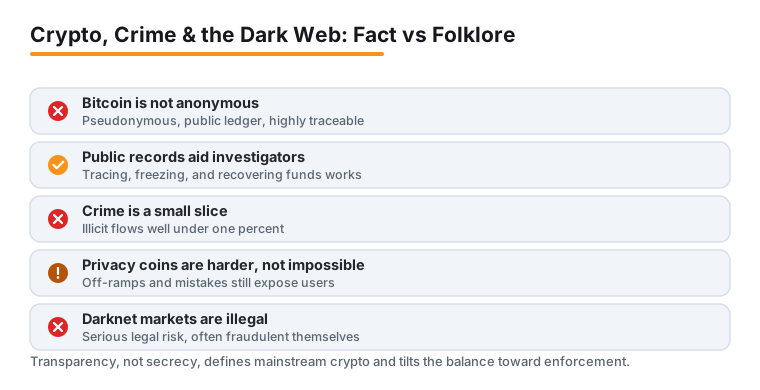
It is true that cryptocurrency is used for illegal purposes. It is also true that the scale of that use is routinely overstated. Industry analysts who track blockchain activity consistently estimate that funds flowing to clearly illicit addresses represent well under one percent of total cryptocurrency transaction volume. In other words, the overwhelming majority of on-chain activity is ordinary: exchange trading, transfers between wallets, payments, and increasingly stablecoin settlement. Figures vary by methodology and year, so treat any single number with caution and check the original research from analytics firms or government agencies before quoting it.
Where crypto does show up in crime, the categories have broadened well beyond the early dark-web-drugs narrative. The major ones include:
- Ransomware, where attackers encrypt a victim's data and demand payment, often in Bitcoin or a privacy-focused coin.
- Scams and fraud, including investment cons, romance scams, and "pig butchering" schemes that frequently dwarf darknet-market revenue.
- Sanctions evasion and state-linked activity, which has grown sharply and now accounts for a large share of flagged illicit value.
- Stolen funds from exchange and protocol hacks.
- Darknet-market commerce, the classic association, which is real but a relatively small slice of the total.
A notable shift is the asset mix. Bitcoin was once the default for illicit transfers, but stablecoins (tokens pegged to a currency like the US dollar) now make up a large majority of measured illicit volume. That matters because most major stablecoin issuers can freeze tokens at specific addresses when alerted by law enforcement, giving authorities a lever that did not exist in Bitcoin's early years.
Dark-web markets
The "dark web" is not a single place. It refers to parts of the internet that are not indexed by ordinary search engines and require specific software to reach. The most common gateway is Tor ("The Onion Router"), which routes traffic through multiple volunteer-run relays to obscure a user's location and the sites they visit. Tor and similar tools are legal in most countries and are used by journalists, activists, researchers, and privacy-conscious people for entirely lawful reasons. The dark web is simply the anonymity layer; what people do on it is a separate question.
Within that layer sit darknet markets: e-commerce sites, often styled like mainstream shopping platforms, that list illegal goods such as drugs, stolen data, and forged documents. They typically work like this:
- Buyers and vendors create pseudonymous accounts and communicate through encrypted messaging.
- Listings carry prices, reviews, and reputation scores, mimicking legitimate marketplaces.
- Payment is made in cryptocurrency, increasingly a privacy coin rather than Bitcoin.
- An escrow system holds funds until the buyer confirms delivery, which is also where many "exit scams" happen when operators vanish with the escrowed balance.
These markets are unstable by nature. They are taken down by law enforcement, hacked, or abandoned by their own operators, and new ones spring up to replace them. Recent years have seen large coordinated international takedowns that dismantled major markets, arrested operators, and seized funds and infrastructure across multiple countries. The lesson for any reader is straightforward: participating in these markets is illegal and carries serious legal risk, and the platforms themselves are frequently fraudulent even by criminal standards.
Tracing transactions
The single most important fact about most cryptocurrencies is that they are pseudonymous, not anonymous. On networks like Bitcoin and Ethereum, every transaction is recorded on a public ledger that anyone can read, forever. Addresses are not labeled with names, but once an address is tied to a real identity, its entire transaction history, past and future, becomes visible. This makes a blockchain closer to a permanent public accounting record than to untraceable cash.
Investigators and analytics firms exploit this through blockchain analysis. Common techniques include:
- Clustering, grouping addresses that are likely controlled by the same person or entity based on how funds move.
- Following the flow of funds through the chain of transactions, even across many hops.
- Identifying off-ramps, the regulated exchanges where crypto is converted to traditional currency. These exchanges typically collect identity information and respond to legal requests.
- Tagging known addresses linked to markets, scams, sanctioned entities, or seized wallets.
The critical chokepoint is the connection between the on-chain world and the real one. To spend illicit crypto, someone usually has to convert it to fiat currency or buy goods, and most reputable conversion points apply Know Your Customer (KYC) checks. That is where pseudonymity tends to break down.
Privacy coins complicate this. Assets such as Monero are designed to hide sender, receiver, and amount by default, which makes them genuinely harder to trace than Bitcoin, and they have become more popular on darknet markets as a result. Even so, "harder to trace" is not the same as "impossible to trace." Investigators can still rely on operational mistakes, exchange records, seized servers, undercover work, and analysis of the points where privacy coins meet the transparent financial system. Mixing services and "tumblers," which pool and shuffle funds to obscure their origin, are likewise countered through analysis and have themselves been targets of sanctions and prosecutions.
Myths vs reality
Much of what people believe about crypto and crime comes from early-2010s reporting that the technology and the enforcement landscape have long since outgrown. Here is how the most common claims hold up.
| Common myth | Reality in 2026 |
|---|---|
| Bitcoin is anonymous and untraceable. | Bitcoin is pseudonymous and its ledger is fully public. It is one of the more traceable ways to move money, which is why criminals have drifted toward privacy coins. |
| Crypto is mostly used for crime. | Clearly illicit activity is a small fraction of total volume, consistently estimated well under one percent. Most usage is trading, transfers, and payments. |
| Once funds hit the blockchain, law enforcement is helpless. | The opposite is often true. Permanent public records have helped investigators trace, freeze, and recover funds and dismantle large operations. |
| Using Tor or the dark web is illegal. | Tor and dark-web access are legal in most jurisdictions and have many legitimate uses. Buying illegal goods is what is illegal. |
| Privacy coins make crime risk-free. | They raise the difficulty of tracing but do not eliminate it. Off-ramps, operational errors, and seized infrastructure still expose users. |
| Mixers guarantee clean, untraceable coins. | Mixers are a known red flag, are countered by analytics, and several have faced sanctions and criminal charges. |
The throughline is that transparency, not secrecy, has become the defining feature of mainstream crypto, and that has shifted the balance toward enforcement over time. None of this is a guarantee of safety in any individual case, and it is not an endorsement of any activity; it is simply how the underlying systems behave.
A closing note on regulation, because it shapes everything above: rules differ enormously by country and change often. Broadly, the global trend is toward more oversight of the points where crypto meets traditional finance, with anti-money-laundering and KYC obligations placed on exchanges and other intermediaries. Specific laws, thresholds, and reporting duties vary by jurisdiction, so do not rely on a general article for compliance. Verify your obligations with official government sources or a qualified legal or tax professional. This page is educational only and is not financial, legal, or tax advice.
Frequently asked questions
Is Bitcoin anonymous?
No. Bitcoin is pseudonymous. Transactions are tied to addresses rather than names, but every transaction is recorded on a permanent, public ledger. Once an address is linked to a real identity, typically at an exchange that collects identity details, its full history can be examined. This makes Bitcoin one of the more traceable ways to move value, not a private one.
Is it illegal to access the dark web?
In most countries, simply using Tor or visiting dark-web sites is legal, and these tools have many legitimate uses for privacy, journalism, and research. What is illegal is the underlying conduct, such as buying drugs, stolen data, or other prohibited goods. Laws vary by country, so check the rules in your own jurisdiction, and treat any darknet marketplace as both unlawful and frequently fraudulent.
How do investigators trace crypto transactions?
They use blockchain analysis to cluster related addresses, follow the flow of funds across the public ledger, and identify the regulated exchanges where crypto is converted to cash. Those exchanges usually collect identity information under Know Your Customer rules and respond to legal requests. Combined with seized servers, undercover operations, and operational mistakes by suspects, these methods have led to numerous arrests and fund recoveries.
Why are darknet markets moving away from Bitcoin to privacy coins?
Because Bitcoin's transparency makes it easier to trace than many users once assumed. Privacy-focused coins such as Monero hide the sender, receiver, and amount by default, so some markets have adopted them to raise the cost of investigation. However, harder to trace is not the same as untraceable, and the points where these coins meet the regulated financial system remain a weak spot for anyone trying to stay hidden.
What share of cryptocurrency activity is actually criminal?
Independent blockchain-analytics research has consistently estimated that funds flowing to clearly illicit addresses represent well under one percent of total transaction volume, even though the absolute dollar figures can be large and grow year to year. Methodologies differ and these estimates capture only what can be identified, so treat specific numbers as approximate and confirm them against the original reports or official statistics.
Last updated: 2026-06.