NFTs Explained: How They Work
An NFT, or non-fungible token, is a unique record on a blockchain that points to a specific digital (or sometimes physical) item and proves who controls it. Unlike a bitcoin or an ether, which are interchangeable with any other unit of the same coin, each NFT carries a distinct identifier that makes it one of a kind. That property is what lets NFTs represent things like digital art, collectibles, in-game items, music, event tickets, and domain names in a way that anyone can verify publicly.
This guide explains what NFTs actually are, the technology that makes them work, where they are genuinely useful, and how creating, buying, and selling work in practice. It also covers the security and legal realities that beginners most often overlook. The aim is a clear, current picture for 2026, without hype or price predictions. Nothing here is financial, legal, or tax advice; for decisions that carry money or legal weight, confirm the details with a qualified professional and with official sources.
What are NFTs?
"Non-fungible" simply means not interchangeable. A ten-dollar bill is fungible: you can swap it for any other ten-dollar bill and lose nothing. A signed original painting is non-fungible: a copy is not the same thing. An NFT applies that idea to the digital world. Each token has a unique identifier recorded on a blockchain, so it can be told apart from every other token, even ones that look identical.
It helps to separate two things that beginners often blur together:
- The token is the entry on the blockchain. It records the unique ID, who holds it, and a link or reference to the underlying content.
- The asset is the thing the token points to: an image, a video, a music file, a game item, a membership, or a real-world claim.
The token usually does not store the actual file on the blockchain itself, because storing large files on-chain is expensive. Instead it stores metadata, a small record that includes a link to where the content lives. That distinction matters a great deal for value and security, and we return to it below.
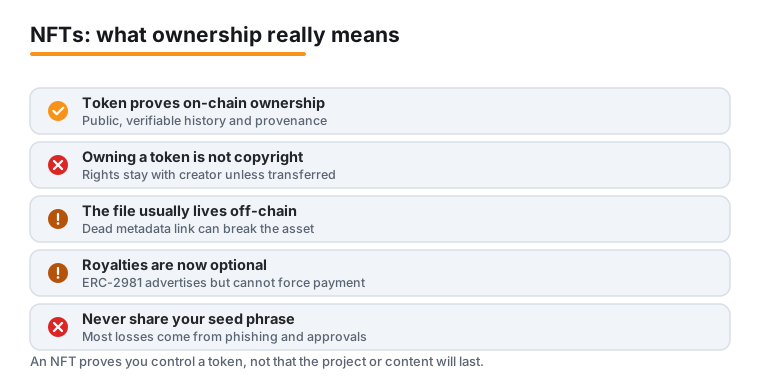
Owning an NFT is best understood as holding a verifiable record of ownership over a particular token. It does not automatically grant copyright or commercial rights to the underlying work unless the creator explicitly transfers those rights. We cover that gap below and again in the FAQs.
How they work
NFTs live on blockchains, which are shared, append-only ledgers maintained by a network of computers rather than a single company. Once a transaction is confirmed, it is extremely difficult to alter, and anyone can inspect the history of a token: when it was created, every address that has held it, and what it last sold for. This public, tamper-resistant record is what gives an NFT its claim to authenticity and provenance.
Token standards
NFTs follow technical standards so that wallets and marketplaces know how to read and handle them. On Ethereum and compatible chains, the common ones are:
- ERC-721, introduced in 2017, the original standard for unique, one-of-a-kind tokens. Each token has its own ID.
- ERC-1155, a multi-token standard that can hold fungible, semi-fungible, and non-fungible items in a single contract, with efficient batch transfers and lower fees. It is popular for gaming, where you might issue many copies of the same item.
- ERC-2981, a standard for signaling royalty information. Importantly, it only reports a suggested royalty; it cannot by itself force a marketplace to pay it (more on this under buying and selling).
Other ecosystems have their own approaches. Solana uses the Metaplex framework and is known for very low transaction fees and high throughput, which suits high-volume use cases. On Bitcoin, the Ordinals protocol enables "inscriptions," where data is written directly onto individual satoshis, producing Bitcoin-native collectibles. These are not all built the same way, so a token created on one chain is not automatically usable on another.
Minting
Creating an NFT is called minting: the act of writing a new token onto the blockchain through a smart contract. Minting typically incurs a network fee (often called gas), which varies by chain and by how busy the network is. Once minted, the token exists and can be transferred or sold.
Metadata and where the file lives
Because the artwork itself usually is not stored on-chain, the token relies on its metadata link. If that link points to an ordinary web server that later goes offline, the token can end up referencing nothing. Serious projects mitigate this with decentralized or content-addressed storage so the asset stays reachable for the long term. It is worth checking how a collection stores its files.
Wallets and custody
NFTs are held in a crypto wallet, identified by an address and controlled by a private key or seed phrase. Whoever holds that key controls the tokens. There is no customer-support line that can reverse a transfer, so safeguarding the key is the single most important habit an owner can build. A marketplace account is not the same as wallet custody; the wallet is what actually holds the asset.
Use cases
NFTs became famous through profile-picture collections and digital art, but the underlying idea, a verifiable, transferable record of ownership, has broader uses. Some have matured into practical tools; others remain experimental. Realistic examples include:
- Digital art and collectibles, the original use case, giving artists a way to sell verifiable originals and earn from secondary sales where royalties are honored.
- Gaming and virtual items, in-game assets that players can own and potentially trade outside a single game's servers. ERC-1155 and low-fee chains are common here.
- Music and media, where musicians and creators issue limited releases, unlockable content, or rights-linked tokens directly to fans.
- Memberships and access, tokens that function as a key to a community, event, or service, sometimes called token-gated access.
- Event tickets, issued as tokens, which can make resale and authenticity easier to track, though adoption varies by venue.
- Identity, certificates, and domain names, where a token represents a human-readable name or a record of achievement.
- Real-world asset claims, early efforts to represent ownership or fractional interests in physical items. These often carry significant legal and custody complications and should be approached with care.
Two caveats are worth stressing. First, an NFT only proves control of the token; it does not by itself guarantee that the linked content is hosted permanently or that the issuer will honor any promised perks. Second, utility varies enormously between projects, and the existence of a token says nothing about whether the project behind it is legitimate or durable.
Legal and ownership realities
The law around NFTs is still developing and differs widely by country, with some regions emphasizing investor protection, others encouraging innovation, and a few heavily restricting crypto activity. A few points hold up broadly: buying a token is not the same as buying the copyright, which stays with the creator unless explicitly transferred; the legal treatment of a token can depend on what it actually does; and tax rules may apply to creating, selling, or earning from NFTs. Speak generally, verify specifics with official sources for your jurisdiction, and consult a qualified professional. This is not legal or tax advice.
Buying & selling
Whether you are creating your first NFT or buying one, you will use a marketplace: a website that connects to your wallet and lets you mint, browse, bid, list, and trade. As of 2026, several large venues serve different audiences. Some focus on broad discovery and ease of use across multiple chains, some target professional traders with advanced tooling, and some specialize in particular ecosystems such as Solana or Bitcoin Ordinals. Fee structures, supported chains, and features change frequently, so check a platform's current terms before transacting rather than relying on a guide.
Creating and minting your first NFT
- Decide what you are making. Start from genuine skill or interest, whether illustration, photography, music, 3D, or generative work. Many creators experiment with free or trial software first.
- Produce and save the asset in a high-quality format, and keep secure backups of the originals.
- Choose a chain and marketplace that fit your work and budget; fee levels differ a lot between chains, which matters if you plan to mint many pieces.
- Set up and fund a wallet, then connect it to the platform.
- Mint the token by uploading the file, adding a title, description, and properties, choosing an edition size (a one-of-one or a limited run), setting a royalty where supported, and confirming the transaction (you usually pay a network fee).
- Promote thoughtfully by sharing the story and process behind the work and engaging real communities. A genuine narrative tends to travel further than generic promotion.
A typical purchase
- Fund a wallet with the cryptocurrency the chain requires (for example, ether on Ethereum).
- Connect the wallet to a reputable marketplace, confirming you are on the correct official website.
- Verify the collection using its verified badge, official links, and contract address; copycat collections are common.
- Buy at a listed price or place a bid, then approve the transaction. You pay the price plus network and marketplace fees.
Costs and royalties
Beyond the purchase price, expect network (gas) fees and a marketplace fee. Creator royalties, a percentage paid to the original creator on resales, were once standard but have become inconsistent. Beginning around 2023, several major marketplaces moved to making royalties optional to attract traders, and enforcement remains fragmented across platforms today. Standards like ERC-2981 can advertise a royalty but cannot compel payment, so actual royalty income depends on where a token is traded. Buyers and creators should both read a marketplace's current royalty policy.
Security and risk management
NFTs have suffered real incidents, including marketplace bugs that let tokens be bought far below market value, phishing that tricks owners into approving malicious transactions, copied artwork, and theft of high-value pieces. Protect yourself and your work:
- Store anything valuable in a hardware (cold) wallet, keeping keys offline, and guard your seed phrase obsessively. No legitimate platform will ever ask for it.
- Use strong, unique passwords and enable two-factor authentication on marketplace and email accounts.
- Periodically review and revoke token approvals you no longer need, since a lingering approval can let a malicious contract move your assets.
- Do your own research on the team, community, and history of any collection; hype and influencer promotion are not due diligence.
- Treat liquidity as uncertain. Many NFTs are hard to resell, and a listed "floor price" does not guarantee you can sell at that level.
- Keep records of purchases and sales, as they may have tax consequences.
This section is educational and not financial, legal, or tax advice. NFT markets can be volatile and illiquid, and you can lose money.
Frequently asked questions
Does owning an NFT mean I own the copyright to the artwork?
Not automatically. Owning an NFT means you control a unique token that points to a work. Copyright and commercial rights stay with the creator unless they explicitly grant them to you, which varies project by project. Always read the project's license terms, and consult a qualified professional for anything involving significant rights or money. This is not legal advice.
What is the difference between an NFT and a cryptocurrency?
Cryptocurrencies like bitcoin are fungible: every unit is interchangeable and has the same value as any other. NFTs are non-fungible: each token is unique and tracked individually, which is what lets it represent a specific item, collectible, or membership rather than a quantity of money.
Are NFTs legal, and are they regulated?
NFTs are generally legal in most countries, but regulation is still evolving and differs widely by jurisdiction. Some regions take an investor-protection stance, others focus on encouraging innovation, and a few heavily restrict crypto activity. How a specific NFT is treated can also depend on what it actually does. Check official sources in your country and seek professional advice before relying on any legal or tax assumption.
Why might I not receive royalties when my NFT is resold?
Royalty enforcement depends on the marketplace, not just the token. Around 2023 several major platforms made creator royalties optional to attract traders, and enforcement remains inconsistent. Standards such as ERC-2981 can advertise a royalty but cannot force a platform to pay it, so your actual royalty income depends on where buyers trade your work.
How do I keep my NFTs safe from theft?
Store valuable NFTs in a hardware wallet that keeps your private keys offline, and never share or type your seed phrase anywhere. Enable two-factor authentication on related accounts, be skeptical of unsolicited links and "support" messages, and periodically review and revoke token approvals you no longer need. Most NFT losses come from phishing and malicious approvals rather than flaws in the blockchain itself.
Last updated: 2026-06.