Recovering Lost or Stolen Crypto
Losing access to cryptocurrency falls into two very different situations, and confusing them sends people straight into the arms of scammers. Either you have lost access to coins that are still rightfully yours, such as a forgotten password, a misplaced recovery phrase, or a dead drive, or someone has stolen them through fraud or a hack. The path forward is completely different for each.
This guide covers how to recover lost crypto when the keys are still retrievable, what realistically happens when funds are stolen and moved on-chain, how to spot the fake "recovery services" that prey on victims, and the prevention habits that make all of this far less likely. The honest truth runs through everything here: blockchain transactions are irreversible, and not every situation has a happy ending. But many losses are recoverable with patience and the right approach, and knowing the difference protects you from a costly second mistake.
This article is educational and is not financial, legal, or tax advice. Laws, agencies, and reported figures change, so verify anything specific with official sources and a qualified professional in your jurisdiction.
Recovering lost wallets
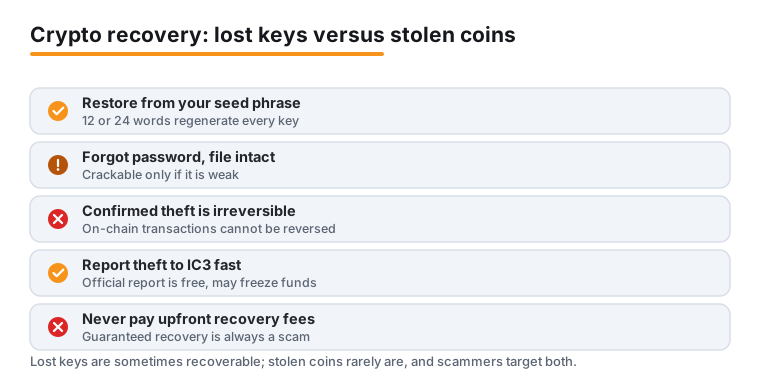
When you have lost access to your own coins, nothing has actually left your wallet. The assets still sit at their address on the blockchain; what you lost is the ability to prove you control them. Recovery means restoring that proof, usually a private key, recovery phrase, or password. Work through the options below in order, from safest to last resort.
Pinpoint exactly what is missing
Recovery depends entirely on which piece you lost:
- You have the recovery phrase but lost the device or app. The easy case. Install a reputable wallet, choose "restore," and re-enter your 12 or 24 words on a clean device; your funds reappear because the phrase regenerates every key.
- You have the wallet file but forgot the password. The encrypted file is intact, so the task is cracking the password, sometimes feasible if you remember fragments.
- You lost both the phrase and the password. Without either, there is generally no way back into a self-custodied wallet. This is the situation no honest specialist can fix and the one scammers most exploit.
- The funds are on an exchange. You do not need keys. Reset your login through the exchange's official account-recovery process and contact support.
Search methodically for backups
Many "lost" phrases are forgotten, not gone. Check old password managers, encrypted notes, email archives, paper kept with important documents, metal backup plates, and old phones, laptops, or USB drives. Wallet files (a wallet.dat or keystore file) often sit in default app folders on an old machine, and if a device is dead but its storage is intact, professional data-recovery labs can sometimes pull files from a failed drive.
Recovering a forgotten password
If the wallet file survives but the password does not, password-recovery tools test large numbers of candidates against the file offline, working best when you supply hints such as known words, length, or patterns. Established tools exist for popular wallet formats, and reputable firms offer this as a success-based service. The math matters: a short or predictable password may fall in days, while a long, random one can be effectively impossible even with serious computing power. That difficulty is the point of good security, and why no honest service can guarantee breaking a strong password.
Seed-phrase repair and partial information
Recovery phrases follow a published standard (BIP39) with a fixed wordlist and a built-in checksum, so some mistakes are fixable. If the words are right but the order is uncertain, or one or two are wrong or missing, specialized tools can sometimes reconstruct the valid phrase by testing combinations that satisfy the checksum. The more words missing, the more the possibilities explode, so this is realistic for one or two gaps, not half a phrase.
When to use a professional
Legitimate wallet-recovery specialists are a reasonable last resort once you have exhausted your own backups, especially for forgotten passwords or scrambled seed phrases on wallets you genuinely own. The defining trait of a trustworthy firm is its fee model: little or nothing upfront, with an agreed percentage charged only if it succeeds. Anyone demanding a large advance payment, or claiming they can reverse a blockchain transaction, is not real, a warning the next section expands on.
Retrieving stolen crypto
Theft is a fundamentally different problem. Once a thief moves your coins to an address they control, the transaction is confirmed and irreversible, and no tool, hacker, or service can pull them back directly. What can sometimes happen is that investigators trace the funds and authorities or exchanges freeze them when the thief tries to cash out. That process is slow, never guaranteed, and largely out of your hands, but acting quickly improves the odds.
Act in the first minutes
Stolen funds are often laundered fast, so move immediately:
- Secure what is still safe. If your device or wallet is compromised, move any remaining assets to a new wallet with a fresh recovery phrase generated on a clean device, then change passwords and reset two-factor authentication.
- Record the evidence. Save transaction IDs (hashes), the thief's receiving addresses, amounts, timestamps, and screenshots of any scam messages or fake sites. This on-chain trail is the foundation of any investigation.
- Notify the relevant exchange. If a custodial account was involved, or you can see funds moving toward a known exchange, contact its official fraud team at once, as exchanges can sometimes freeze deposits tied to a reported theft.
How tracing actually works
Public blockchains are transparent: every transaction is permanently visible. You can follow stolen coins yourself with a free block explorer, watching where they hop next. Investigators and law-enforcement units go further with blockchain analytics platforms (firms such as Chainalysis, Elliptic, and TRM Labs are widely used) that cluster addresses, label known services, and flag when funds reach a regulated exchange where a real identity is attached. By late 2025, analytics providers reported helping partners freeze or seize tens of billions of dollars cumulatively, and the year saw several record seizures. Recovery does happen, but it concentrates in cases that intersect large investigations or where funds touch a compliant exchange. Treat any specific figure as approximate and confirm current numbers with the firms or agencies themselves.
Why some thefts are nearly untraceable
Thieves increasingly use techniques designed to break the trail: mixing or tumbling services, privacy coins, and especially cross-chain hops that swap assets between different blockchains. Industry research in 2025 identified cross-chain laundering as the single biggest obstacle to recovery. Funds that vanish into these channels rarely come back, which is why prevention matters more than any recovery technique.
Report to the authorities
Filing an official report is essential and free, and it is the legitimate counterpart to the recovery scams below. In the United States, report to the FBI's Internet Crime Complaint Center at ic3.gov and consider the FTC; other countries have equivalent cybercrime bodies. Provide your documented evidence. Agencies coordinate across borders and with exchanges, and while most individual cases do not end in full recovery, your report can feed larger cases and occasionally leads to restitution. This is precisely why working through official channels, rather than a stranger promising a fast fix, is the right move.
Avoiding recovery scams
Here is the cruelest part of crypto loss: people who have already been scammed or hacked are the prime target for a second scam. Fraudsters scour social media, forums, and victim posts for anyone desperate to recover funds, then pose as recovery experts, "blockchain forensic" firms, hackers-for-hire, or even government investigators. These so-called recovery services are one of the largest fraud categories around crypto, with reporting bodies logging thousands of complaints and losses in the billions. Agencies have repeatedly warned that they will never charge a fee to recover funds or refer you to a paid service. If you remember one thing, make it this: legitimate help does not cost a large upfront payment, and no one can reverse a confirmed blockchain transaction.
Red flags that almost always mean fraud
- Guaranteed recovery. No honest party can promise to retrieve on-chain funds or crack a strong password.
- Upfront fees, "taxes," or "unlock" deposits. Scammers invent endless reasons to extract more before a payout that never arrives.
- Unsolicited contact, especially right after you post about a loss.
- Requests for your private keys or recovery phrase. Anyone asking for these is trying to steal what you have left. No legitimate service needs them.
- Pressure and urgency. "Act now or lose your chance forever" is designed to stop you thinking. Real recovery is slow.
- Claims of insider or hacker access, such as offers to "hack the hacker" or use secret tools to reverse transactions.
- Impersonation of law firms, officials, or real analytics companies through cloned sites. Verify identities through official channels, not links they send.
How to vet a service if you do seek help
For genuinely recoverable situations (a forgotten password or a self-owned wallet), some legitimate firms exist. Vet them carefully:
- Confirm the fee is success-based, with little or nothing upfront, and get terms in writing.
- Look for a verifiable identity: registered company, named team, address, and an independently checkable track record rather than testimonials on their own site.
- Search the company name alongside "scam" or "review" for independent discussion. Be wary of flawless reviews, poor grammar in official messages, and demands for payment in crypto or gift cards.
- Never hand over your recovery phrase, and never grant remote access to a machine holding a live wallet.
If you spot a recovery scam, report it to the same authorities you would for the original theft and warn others. Documenting and sharing these schemes blunts them, because fraudsters rely on isolated, panicked victims.
Prevention
Because recovering stolen crypto is uncertain and lost keys are often gone for good, the real win is making loss and theft unlikely in the first place. It comes down to protecting your keys, hardening your accounts, and keeping reliable backups. Match the effort to the stakes: a small spending balance needs less than a long-term savings stack.
Protect and back up your recovery phrase
Your recovery phrase is your crypto. Anyone who has it controls your funds; anyone who loses it loses access.
- Write it by hand and store it offline. Never type it into a website, screenshot it, or save it in cloud storage, email, or chat.
- Keep more than one backup in separate secure locations so a single fire, flood, or theft does not wipe you out. Metal plates survive damage that paper does not.
- Consider an optional passphrase (an extra word) for added protection, but only if you can store it as carefully as the phrase, since losing it makes funds unrecoverable.
- Test recovery on a spare or reset device before trusting a backup with real value, so you catch a transcription error while it is harmless.
Use the right wallet and authentication
- For meaningful amounts, use a hardware wallet that keeps keys offline and requires physical confirmation for every transaction; buy it directly from the manufacturer.
- Use long, unique passwords from a reputable password manager, and enable two-factor authentication with an authenticator app or hardware security key, not SMS, which is vulnerable to SIM-swap attacks.
- Double-check addresses before sending and use a small test transaction for large transfers, since clipboard-hijacking malware can swap a pasted address.
Plan for resilience and inheritance
Some wallets reduce the all-or-nothing risk of a single lost key. The table below summarizes common approaches.
| Approach | How it helps | Main tradeoff |
|---|---|---|
| Recovery phrase (BIP39) | Restores a wallet on any compatible device from 12 or 24 words | Single secret; if lost or stolen, funds are gone |
| Multisignature (e.g. 2-of-3) | Requires several keys in different places; no single point of failure | More complex setup and recovery |
| Social recovery | Trusted "guardians" help you regain access if you lose a key | Depends on reliable, independent guardians |
| Multi-party computation (MPC) | Splits key material so no one device holds the whole key | Relies on the provider's implementation |
Whatever you choose, leave clear, secure instructions so a trusted person can access funds if something happens to you. An unwritten recovery plan is a common cause of permanently lost coins. Finally, stay skeptical of unsolicited offers, "guaranteed" returns, and urgent demands: the same instincts that protect you from investment fraud also protect you from the recovery scams that follow it.
Frequently asked questions
Can stolen crypto ever be recovered?
Sometimes, but not by reversing the transaction, which is impossible once it confirms on-chain. Recovery happens when investigators trace the funds and authorities or exchanges freeze them as a thief tries to cash out through a regulated platform. This works best for large cases and when funds touch a compliant exchange. Report the theft promptly to police and your national cybercrime body and preserve all evidence, but set realistic expectations: many individual cases do not end in full recovery, and funds laundered through mixers or across chains rarely return.
I forgot my wallet password. Is my crypto gone?
Not necessarily. If you still have the wallet file or the recovery phrase, you have options. With the phrase, you can simply restore the wallet on a new device. With the file but no password, recovery tools or reputable specialists can sometimes crack it, especially if you remember parts of the password or its length and structure. A strong, fully random password may be effectively impossible to break, which is by design. If you have lost both the phrase and the password to a self-custodied wallet, there is generally no way to regain access.
How do I know if a crypto recovery service is a scam?
The clearest signals are the fee model and the promise. Scammers demand large upfront payments, invent extra "fees" or "taxes" before a payout, guarantee they can retrieve stolen funds, contact you first, and often ask for your recovery phrase or remote access. Legitimate help charges little or nothing upfront and takes a success-based percentage only for genuinely recoverable cases like a forgotten password. Law-enforcement agencies never charge to recover funds or refer you to a paid service. When in doubt, treat unsolicited recovery offers as fraud and verify any firm through independent sources.
Should I pay an upfront fee to recover my lost crypto?
For stolen funds that have already moved on-chain, no, and any upfront fee there is a scam, because no service can reverse the transaction. For a self-owned wallet with a forgotten password or scrambled seed phrase, a reputable specialist may help, but the trustworthy arrangement is success-based: little or nothing upfront, with an agreed percentage only if they actually recover your funds. A demand for a substantial advance payment is a major red flag in either case.
What is the single best way to avoid needing crypto recovery?
Protect and back up your recovery phrase, and use a hardware wallet for meaningful amounts. The most common causes of permanent loss are forgotten or misplaced keys and falling for scams, not the blockchain failing. Write your phrase down offline, keep more than one copy in separate secure locations, never enter it into a website, use app-based or hardware two-factor authentication, and leave a secure recovery plan for a trusted person.
Last updated: 2026-06.